_edited_edited.png)
Program & Presenters

Keynote Presentation: Risa Shaw, PhD
Survivor, Researcher, Author, Activist, Artist

Risa Shaw (she/her), is a survivor of childhood sibling sexual abuse. That trauma has shaped her life for the last five decades. From age 24 when she felt the necessity and found the courage to tell her family about her brother’s sexual predation12 years before, she has become the outspoken activist she is today. It was her family’s deeply wounding, dismissive reaction to her disclosure that gave her the strength to begin to confront the damage caused by secrecy, shame, silence, and the stigma of sibling sexual abuse both for herself and on behalf of countless others.
Risa's research is the first and only of its kind conducted by a survivor researcher with survivor participants’ experiences of disclosing to their family members. (Read the research here.) It documents how disclosures are often met with retraumatizing denial and rejection, instead of support, accountability, and repair. Among her conclusions was the finding that disclosing abuse, though fraught, is a courageously assertive act that is transformative and liberating for SSA survivors. Disclosure can also be transformative and liberating for all SSA family members, as well as a tool to prevent harm, to heal, and to repair.
In 2000, the publication of her anthology of survivors’ stories and artwork, Not Child’s Play, was the first and only book to focus on SSA, edited by a survivor, not only at the time but for many years to come. Not Child’s Play describes the devastation of SSA in survivors’ own words and images. It was the first published opportunity for survivors to be heard and seen. With the release of Not Child’s Play, 2nd edition in 2023, Risa reaffirmed her commitment to telling SSA survivors’ stories that have long been buried.
Risa's vision is a world where survivors of sexual abuse are heard, believed, and supported — where silence no longer dominates, and where speaking truth is honored as courageous, not denigrated as shame. She wants a future where children are raised with agency where consent, accountability, and repair are taught and expected. We need one another, all of us with lived experience, to tell our stories and imagine into being ways of transforming this world. More at notchildsplay.com.
S. Grace Wine, PhD, Joseph Wine, LPC, Katelyn Bleigh: Speak Out for Hope: A Family's Story of Transformation
On the surface, this family appeared to be thriving. Behind closed doors, however, they were confronting a reality few families are prepared for: sibling sexual abuse that went unrecognized until significant harm had already occurred.
In this deeply personal presentation, parents and survivors share their perspectives on disclosure, response, and the long path toward healing. They will explore what happens when early concerns are dismissed, how systems meant to protect children struggle with child-on-child harm, and the isolation families often experience when others do not know how to respond. The session highlights the gaps many families encounter across medical, mental health, educational, and legal systems, as well as the emotional toll of trying to support both children while navigating uncertainty and grief.
Through their story, the speakers offer insight into what healing can look like over time — including the survivor’s journey from secrecy to voice and the parents’ shift from shock to advocacy and support for others facing similar circumstances. Grounded in lived experience and trauma-informed practice, this session offers a rare opportunity to hear from a family that has navigated both devastation and the possibility of transformation after sibling sexual trauma and abuse.

S. Grace Wine (she/her) leads with empathy and purpose, helping schools create safe, trauma-informed spaces where students can heal. Joseph Wine (he/him) walks alongside individuals and families with grounded compassion and practical tools for healing. Katelyn Bleigh, a survivor, shares her story and co-presents trauma-informed strategies with Grace to support educators.
Grace and Joseph's company, People First Always, LLC facilitates transformation through a holistic approach that integrates trauma-informed practices, leadership development, and specialized coaching. They have a book, Don't Say Dumb Shit: Surviving a Parent's Worst Nightmare and they host a virtual support group for parents of SSTA, Safe Harbor: Holding Hope Together.
Heidi & Dave Yewman: The Long Road: How a Survivor and Partner Learn, Stumble, and Grow Together (video link)
What does it take to sustain a long-term relationship after sibling sexual trauma and abuse? For many survivors, healing unfolds over decades, often interrupted by triggers and setbacks. Partners face their own challenges — learning how to support without overstepping, listen without trying to fix, and remain steady while loving someone carrying deep pain.
In this candid, lived-experience session, Heidi and Dave share the realities of their 35-year marriage shaped by trauma, resilience, and ongoing healing. They speak openly about growing together through missteps, difficult conversations, and the slow rebuilding of trust and safety. The presentation will explore how trauma can affect intimacy, communication, and conflict, as well as the daily work of balancing recovery with careers, family, and community. They will also discuss what meaningful support looks like in practice and how both partners can sustain compassion for themselves and each other.
Offering the rare perspective of both survivor and spouse, this session provides an honest example of persistence — showing how connection can be rebuilt through patience, honesty, and the willingness to keep showing up for one another.
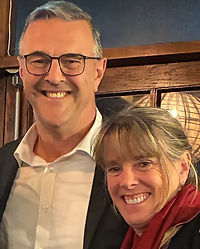
Heidi Yewman (she/her) is an author, filmmaker, advocate, and SSTA survivor. Her memoir, Dumb Girl, traces a childhood marked by abuse and silence. It also chronicles the unexpected healing she found as an adult through trauma-informed advocacy and storytelling centered in empathy, accountability, and cultural change.
Dave Yewman (he/his) has been married to Heidi for 35 years, and together they have raised two children and built a shared life in the Pacific Northwest. As Heidi’s partner through decades of trauma recovery, he offers an honest perspective on what it means to love and support a survivor of sibling sexual abuse, including the missteps, learning curves, and growth that happen along the way. His perspective is rooted in lived experience and in a willingness to speak openly about the realities of sustaining a long-term relationship while navigating trauma and healing.
Bridget Meranda, MSW, LCSW, RPT™: Navigating the Storm: Parents Supporting their Children & Healing After Sibling Sexual Trauma (link to slides)
Sibling sexual trauma places parents in an almost impossible position: trying to protect and support the child who was harmed while also responding to the needs of the child who caused harm — all while coping with their own shock, grief, fear, and trauma.
Bridget brings the powerful dual perspective of a parent of a child who experienced sibling sexual abuse and a licensed mental health therapist specializing in childhood trauma. Participants will gain insight into the emotional, psychological, and practical challenges that arise when a family is navigating this deeply disruptive experience. Topics covered will include the impact of SSTA on family systems; the effect of parental secondary trauma on emotional regulation and parenting capacity; techniques for supporting co-regulation between parent and child when both are triggered by trauma reminders; and how safety and connection can improve regulation.
This unique and practical session will provide validation, education, and guidance to support families in crisis. Attendees will leave with a deeper understanding of the inner world of the complexities of parents when parenting after SSTA, why even well-intentioned responses can feel overwhelming or inadequate in the moment, and ways they can increase a sense of connection and safety during the healing process for both children and parents.

Bridget Meranda (she/her) is a Licensed Clinical Social Worker & Registered Play Therapist who provides individual therapy to children who have difficulty with anxiety, depression, and impact of traumatic events. Bridget is also a mother and parent of a child who has experienced sibling sexual trauma. Her personal and professional experiences have increased her passion for education on sibling sexual trauma and abuse (SSTA) and family system impact of sexual trauma. Bridget is the owner of Bridget’s Empowerment Solutions where she provides training and consultation for families and professionals to increase their knowledge and impacts of SSTA. She recently published a children's book, Rosie's Big Secret to provide a resource to children that encourages communication and building confidence to share trauma they have experienced.
Lupita Najera: Creciendo con Amor/Growing with Love (link to slides)
Raised in a Mexican-American border community where family, culture, and tradition shape identity, Lupita’s healing journey unfolds within a context rarely centered in conversations about sibling sexual trauma. Her story explores how cultural expectations, family bonds, and the experience of growing up with an ill parent influenced both the silence surrounding abuse and the path toward recovery.
In this survivor-led presentation, Lupita shares how she moved from survival toward growth, drawing on personal resilience, community, and resources that helped her reclaim her voice and sense of self. She will reflect on the lasting impacts of trauma, the complexities of healing within tight-knit families, and the role culture can play as both a barrier and a source of strength. Lupita emphasizes that her story is not hers alone — it reflects the experiences of many whose voices remain unheard. Through storytelling, reflection, and connection, she invites attendees to consider how sharing truth can become part of collective healing.
This session offers a compassionate space to explore identity, resilience, and the courage to speak, honoring that healing is not linear and that every journey unfolds differently.

Lupita Najera (she/her) is a Mexican-American SST self-healing survivor. She tells her story and chronicles the various ways that she moved forward, continued to grow, and refused to let SST consume her. Her Creciendo Con Amor Podcast is now available on YouTube and Spotify.
Jacqueline (Jacque) Page, Psy.D.: Realities of Separation & Reunification in Sibling Sexual Abuse
Sibling sexual abuse presents families and professionals with extraordinarily difficult decisions. One of the most complex questions is whether siblings can remain together safely or whether separation is necessary. While separation may be essential for safety, it can also bring unintended consequences, including family stress, grief, disrupted relationships, identity concerns, and self-blame for the child who was harmed. Families are often left navigating these challenges with little guidance.
This presentation explores why separation is sometimes necessary, how to minimize its negative impact, and the factors that influence decisions about if and when reunification may be possible. Dr. Page emphasizes individualized, evidence-informed decision making that considers developmental needs, family dynamics, context, and long-term well-being. Attendees will also learn why reunification is not a simple return to previous circumstances, but a carefully planned process involving preparation, therapeutic support, and ongoing safety measures. The session underscores the importance of collaboration among families, clinicians, and systems to support healing while maintaining safety for all children involved.
Grounded in more than three decades of research and practical experience with families navigating these painful realities, this presentation provides guidance, clarity, and a deeper understanding of one of the most challenging aspects of sibling sexual abuse response.

Jacqueline Page (she/her) is a psychologist and professor at the University of Tennessee Health Science Center Department of Psychiatry. She has specialized in working with children and youth with problematic sexual behavior and their families for 35+ years. A specific focus of her work is sibling sexual abuse. She enjoys presenting and collaborating with others in helping youth and families.
Amanda Lee Brush: Writing Narratives as a Healing Practice
For many survivors, the story does not end when the abuse stops; it lives on in memory, silence, family dynamics, and identity. Writing can become a powerful way to reclaim voice, meaning, and agency.
In this discussion, Amanda and fellow survivors will explore how narrative writing — in forms such as journaling, memoir, poetry, letters (sent or unsent), and fragmented storytelling — can support healing at different stages of the journey. Drawing on both personal experience and literary practice, she will examine the difference between writing for oneself and writing for an audience, and how each can serve a distinct purpose. Importantly, she will discuss risks and benefits—including the potential for retraumatization—and the safeguards, support systems, and pacing that can help writing remain a constructive rather than overwhelming process.
Prescreened audience questions will enable participants to engage with the topic thoughtfully and with support, making this session not only informative but also deeply validating for those who have considered putting their experiences into words.

Amanda Lee Brush (she/her) is a writer with a focus on historical fiction and memoir. Drawing from her life to craft poignant prose, her words capture the essence of the most pivotal experiences of her life, especially those as a survivor of SSTA and the complex relationship that resulted with her late mother. Her work has been featured in publications like Mom Egg Review, Pangyrus, and Beyond Words Literary Magazine. When not immersed in writing, Amanda can be found enjoying independent bookstores and laughing over a good meal with friends.
Darlene Lekowski: Letting Go to Live Forward (video link)
Many survivors become highly skilled at survival. Strategies such as silence, hypervigilance, control, dissociation, or people-pleasing often develop early as necessary ways to endure overwhelming experiences. But when safety increases and healing begins, those same patterns can quietly limit connection, peace, and the ability to move forward.
In this survivor-led session, Darlene explores the complex transition from surviving to living. Drawing on lived experience, decades of silence, she examines what it truly means to “let go”—not as forgetting, minimizing harm, or offering premature forgiveness, but as releasing patterns that no longer serve the life a survivor is building.
Darlene introduces a “Living Forward Mindset” centered on agency, self-trust, and intentional choice. She will also share grounding and regulation practices that support a sense of safety beyond survival, acknowledging the body’s critical role in healing.

Darlene Lekowski (she/her) is an author, advocate, speaker, and survivor who broke fifty years of silence after experiencing SSTA by her two oldest brothers. After defending her truth through the civil justice system when one of them sued her, Darlene is committed to sharing her hard-won lessons on healing, resilience, and reclaiming one’s voice. She has published a memoir, Shattering Silence: A Story of Survival, Justice and The Power of Telling the Truth.
Katelyn Bleigh: Reimagining Healing: What Thriving Looks Like for Survivors of Sibling Sexual Assault
Healing from sexual trauma is often portrayed as a straight path toward closure — but for many SSTA survivors, the reality is far more complex. In this survivor-centered session, Katelyn challenges traditional narratives that focus on “getting over it” and instead reframes healing as a deeply personal, nonlinear journey shaped by choice, creativity, and connection.
Through survivor-informed dialogue, participants will explore approaches that shift the focus from pathology to possibility — asking not “What’s wrong?” but “What might be possible?” Katelyn will discuss how healing can take many forms, including art, spirituality, movement, and meaningful relationships, and how these pathways can help survivors reconnect with themselves and their bodies. The presentation also examines what thriving can look like beyond survival. Topics include rebuilding trust in oneself, establishing healthy boundaries, reclaiming voice and visibility, and embracing joy as an act of strength rather than denial. Emphasis is placed on honoring each survivor’s autonomy and pace, recognizing that healing is not about erasing the past but expanding one’s life around it.
Grounded in lived experience and trauma-informed practice, this session offers validation, language, and practical strategies for survivors and those who support them, encouraging a broader, more compassionate understanding of what recovery can be.

Katelyn Bleigh (she/her) is a trauma survivor and advocate whose lived experience brings depth to trauma-informed workshops for educators and professionals. By sharing how trauma shaped her learning and life, she helps others respond with greater empathy, awareness, and compassion.
Brinn Langdale, LMFT: Modern Day Forgiveness: Forgive for You, Not Them (video link)
Forgiveness is often presented as something survivors should offer — quickly, completely, and sometimes at the expense of their own truth. For many, the very idea evokes pressure, confusion, anger, or deep internal conflict.
This workshop offers a trauma-informed reframe of forgiveness as a personal psychological process, not a moral obligation or requirement for healing. Drawing on lived experience and clinical practice, Brinn explores what forgiveness is and what it is not, emphasizing that reconciliation, continued contact, or minimizing harm are not prerequisites. Participants will examine common myths that leave survivors feeling blamed or rushed to “move on,” and consider how anger, grief, and self-blame can affect emotional and physical well-being over time. The session also explores how releasing what no longer serves — at one’s own pace — can create space for clarity, regulation, and a greater sense of freedom, while still maintaining firm boundaries and accountability. Forgiveness is presented not as something done for the person who caused harm, but as a choice that may benefit the survivor’s own healing.
Grounded in compassion and respect for autonomy, this presentation offers language, perspective, and tools for those navigating complex feelings about forgiveness, whether for themselves or in supporting someone they love.

At 18 years old, Brinn Langdale (she/her) admitted to herself, and her family, for the first time that she had experienced sibling sexual abuse for 12 years. This opened her eyes to the impacts that trauma had on her mental and physical health and set her on a journey of healing and forgiveness. Today, Brinn runs a thriving private practice as a licensed psychotherapist, coach, author and speaker. Brinn’s core message, that everything you do makes perfect sense and that healing is possible, resonates with a wide range of audiences, including students, professionals, survivors, and anyone seeking personal growth and self-improvement. Her memoir is titled Everything Makes Perfect Sense.
Chase Henry, Certified Peer Specialist: Reeling, Feeling, Healing
In this session, Chase shares his lived experience of surviving sibling sexual trauma and offers insights for all based on his long, nonlinear path toward recovery, growth, and hope. Reflecting on his childhood, he will highlight moments when opportunities for intervention were missed and discuss factors that can increase vulnerability to abuse, offering insight into how earlier recognition might change outcomes for children today.
Chase will then explore his own healing journey, emphasizing the role of connection at multiple levels — from close relationships to online survivor communities and the broader local community. He will speak openly about reducing shame and secrecy through therapy and disclosure, accepting memory as an imperfect record, and learning that not remembering every detail does not invalidate one’s experience.
The session also highlights the power of mutual support, including how openness can foster healing not only for survivors but for those around them. Chase will discuss reclaiming personal interests, self-determination, and the importance of defining recovery on one’s own terms rather than through external expectations.
Grounded in peer-support principles and self-compassion, this presentation offers an honest example of how healing can unfold through connection, acceptance, and the courage to live fully beyond trauma.

Chase Henry (he/him/his) is a loving husband, partner, and pet parent; an amateur gardener; and a survivor of SSTA. In recent years, he's worked to heal his trauma by building community, connection, and self-compassion. His work as a Certified Peer Specialist helps him recover while helping others do the same.
Tova Lewin, BA: Sibling Sexual Abuse: A Unique Intrafamilial Trauma
Sibling sexual abuse is recognized by many clinicians as one of the most common forms of family violence — yet it remains poorly defined, under-recognized, and often misunderstood. Without clear definitions, families struggle to name what happened, professionals struggle to respond effectively, and meaningful data remains difficult to collect.
In this research-informed session, Tova will explore this complex and often invisible form of abuse through psychological research, survivor perspectives, and real-world clinical challenges. Drawing on systematic reviews, empirical studies, and collaboration with survivor-led organizations, the presentation will highlight survivors’ lived experiences, the dilemmas faced by parents and practitioners, and the barriers that continue to hinder recognition and effective intervention. Audience discussion will be invited as part of this ongoing effort to bridge the gap between research, practice, and lived experience.
By integrating insights from research, public engagement, and lived experience, this session offers a rare opportunity to understand why sibling sexual abuse is so difficult to define and address — and what steps are needed to improve awareness, prevention, and support.

Tova Lewin (she/her) is a senior research assistant working with Anat Talmon, PhD, Associate Professor at Hebrew University of Jerusalem, and founder and director of The Trauma Group. She holds a bachelor’s degree in psychology and has professional experience with youth at risk, sexual abuse and exploitation and domestic violence. Tova's research focuses on intrafamilial violence and abuse. She has been primary author on three academic articles focused on the lived experience of sibling sexual abuse,
I got played by my best friend in my own home: Survivor testimonies of sibling sexual abuse (Journal of Sexual Aggression, 2023), The parental experience & emotional response to SSA: When a parent's most valuable gift becomes a source of trauma (Child Abuse & Neglect, 2024, collaboration with 5WAVES), and The impact of sibling sexual abuse on intrafamilial relationships: A fractured group of related people (Child Abuse & Neglect, 2026, collaboration with 5WAVES)
Jean Donahue : SSA: The Silence, The Stigma, and a Survivor's Truth (video transcription)
Sibling sexual trauma and abuse is often minimized, misunderstood, or left out of broader conversations about child sexual abuse. As a result, many survivors grow up carrying shame, confusion, and long-term impacts in isolation, without language or support to make sense of what happened.
This survivor-led session explores how being harmed by a sibling can shape identity, relationships, and self-worth in ways that are rarely acknowledged publicly. Through personal narrative, reflection, and guided discussion, Jean will examine how survivors navigate relationships that were both formative and harmful, and the lasting effects of silence on one’s sense of self. The presentation will address how to speak about abuse that does not fit common cultural narratives, the stigma that surrounds SSTA, and the role of compassionate, attuned support in healing from shame.
This session is designed as a trauma-informed space where reflection is invited, participation is welcome but not required, silence is respected, and no graphic details will be presented. Drawing from Jean’s perspective as a survivor, educator, spouse, and parent, it offers a grounded, deeply human voice breaking through the silence on SSTA.

Jean Donahue (she/her) is a survivor of SSA, a Registered Early Childhood Educator, wife, and mother. She is committed to breaking the silence and stigma surrounding SSA and creating spaces where clinicians, survivors, and those who support them can listen, reflect, and heal. This presentation is her first step into public advocacy.
Lucy :) Inman: Finding Your Voice to Break the Silence
Sharing one’s story can take many forms, from writing and art to conversation, advocacy, or creative expression. Every voice is different and healing can emerge through many channels, not just traditional speaking or disclosure.
This interactive breakout session is designed to foster connection, participation, and the discovery of each participant’s unique voice. Lucy will create a supportive, trauma-informed environment where attendees can engage through hands-on activities, small- and large-group discussion, paired sharing, and personal reflection, with participation always optional.
The session also addresses the complexities of vulnerability, including how to discern when, where, and with whom to share, and how to care for oneself before and after sharing difficult experiences. Through guided questions and compassionate discussion, attendees will reflect on the power of sharing their voice, while honoring personal boundaries, readiness, and choice.
Grounded in lived experience, Lucy’s approach centers kindness, connection, and the reassurance that no one is alone — and that every voice, shared in its own time and way, has value. The emphasis will not be on pressure to speak, but on curiosity, self-trust, and discovering what feels authentic and empowering for each individual.

Lucy :) Inman (she/her) is a survivor of SSA who has come to find her voice through writing and experienced the healing that can be found when we risk breaking the silence. Above all, Lucy wants you to know that you are not alone and that your voice matters.
Maria Socolof, MS: Framing Sibling Sexual Behavior for Frontline Workers (audio link), (link to slides)
Sexual behavior between children is often evaluated using developmental continuums designed primarily for peer interactions. However, when these models are applied to siblings, too often they result in underestimating harm, overlooking the needs of the child who was hurt, or failing to provide appropriate intervention.
In this interactive workshop, Maria will introduce a contextual framework (Sibling sexual behaviour is different: Toward a conceptual framework of harmful sexual behaviour among siblings, Journal of Sexual Aggression, 2026) for understanding sibling sexual behavior that better reflects the realities of SSTA. She will explore how behavior considered normative between peers may be harmful between siblings, and why severity alone does not determine the depth of trauma experienced -- while also emphasizing the importance of responding thoughtfully to the sibling who caused harm without stigma or unnecessary escalation. Through case studies and discussion, participants will examine the potential of this framework for assessing needs, supporting both children appropriately, and making decisions that balance safety, healing, and long-term well-being.
Designed especially for frontline workers but relevant to parents and advocates, this session offers a nuanced approach aimed at improving prevention, early intervention, and outcomes for families affected by sibling sexual trauma.

Maria Socolof (she/her) is president and cofounder of the nonprofit 5WAVES, Inc., survivor of sibling sexual trauma, and author of The Invisible Key: Unlocking the Mystery of My Chronic Pain and healingfromchronicpain.com. She has a Master of Science degree in Environmental Health Management from the Harvard School of Public Health and formerly worked as a senior environmental health research scientist. The article she is presenting was published a month after the conference, at https://www.tandfonline.com/doi/full/10.1080/13552600.2026.2704741; for those without access, click here for accepted text manuscript. (audio linked here is the same presentation, given at a different time)
Katie Grant, MS, LCPC, LMHC, EMDR Approved Consultant: When a Shared Parent Dies: Another Layer of Pain, Another Layer of Healing
The death of a parent can reopen wounds that survivors thought they had already faced — especially when that parent is shared with the person who caused harm. Grief may become entangled with unresolved trauma, forced proximity, legal ties, or renewed emotional upheaval, creating a complex experience that few people openly discuss.
In this deeply personal and clinically informed presentation, Katie shares her own experience of navigating grief while confronting the renewed impact of sibling sexual abuse. She explores how the loss of a shared parent can trigger unexpected layers of pain, anger, and vulnerability, even after years of dedicated healing work.
Drawing on both lived experience and trauma theory — including the Adaptive Information Processing (AIP) model underlying EMDR therapy — Katie will examine why these reactions can feel so raw and destabilizing, and how the grieving process can intersect with unresolved or reactivated trauma memories. This session acknowledges the profound lack of control survivors often face when family systems pull them back into contact, roles, or dynamics they did not choose. It also considers the possibility that grief can surface emotions that were previously inaccessible, creating both distress and opportunity for further healing.
Grounded in authenticity and compassion this session will offer attendees a chance for reflection and discussion on their own experiences or professional observations in a supportive environment.

Katie Grant (she/they) is a survivor of sibling sexual abuse around age 8, discovered when she was 17. She received a Master of Arts in Psychology in 2006 and became licensed as a Clinical Professional Counselor in Illinois in 2011. Katie has specialized in treating trauma in her solo private practice since 2013. Katie identifies as fat, bisexual/queer, plural, neurodivergent, and chronically ill. Her client-centered therapy work, which is delivered individually and in groups, open to all ages and genders, is both neuroscience-informed and guided by mindful experience. After two decades, she feels affirmed in her beliefs that authentic relationships are the agent of change, and being a therapy client is the best educator of excellent therapists.
Tanya Rouleau Whitworth, PhD and Leslie Abrons, LCSW: It Doesn't Start with Sexual Abuse: Bringing Together Research and Advocacy on All Forms of Sibling Abuse (link to slides)
Sibling sexual abuse is increasingly recognized as a serious form of childhood trauma — yet research and advocacy in this field are often divided, separating sexual abuse from physical and psychological sibling harm. This separation can limit understanding of how abuse actually unfolds within families.
In this research-informed session, Tanya and Leslie will explore the overlap between different forms of sibling abuse, highlighting how patterns of dominance, control, and harm may develop over time and across multiple forms of interaction. Drawing on existing research and survivor narratives they will examine how sibling sexual abuse may coexist with or be shaped by physical and psychological abuse dynamics.
The presentation challenges the idea that these experiences should be understood in isolation, instead offering a more integrated framework that reflects the complexity of real-life sibling relationships. Survivor voices will be included to illustrate how these dynamics are experienced and remembered over time.

Tanya (she/her) is a sociologist who studies the importance of family and parenting experiences for children’s and adolescents’ health and well-being. Her current work focuses on sibling aggression and abuse (SAA), particularly sibling sexual abuse (SSA). As the Assistant Director of the Sibling Aggression and Abuse Research and Advocacy Initiative (SAARA), she develops resources and training materials for professionals, families, and the public aimed at raising awareness and developing evidence-based strategies to prevent and address SAA and SSA.
Panel: A Pivotal Moment: Experiences and Effects of Disclosure Reactions for Survivors
Risa Shaw (moderator), Aaron, Annie VW, Chase Henry

Survivors' experiences around the disclosure or discovery of their sibling's abusive behavior can greatly affect the lifelong trajectory of their healing journey, positively, negatively, or a mixture of both. In this session, survivors Aaron, Annie, and Chase will share diverse disclosure experiences that have unfolded during their lives. It emphasizes that disclosure is not a singular experience, but an evolving process. Parents, supportive family members, practitioners, and researchers are all encouraged to attend to gain understanding about disclosure from survivors' perspectives and learn ways to improve reactions to disclosure in their families or in their practice.
The Mind-Body Connection: Healing the Somatic Effects of Sexual Trauma
Maria Socolof (moderator), Colleen, Claire (video link)

The traumatic effects of sibling sexual abuse on survivors go beyond mental harm. Given the integral connection between the brain, nervous system, stress response, and all other body systems, trauma is very often manifest in the body, with effects that can linger for life. This also means that not only is physical healing an integral part of many survivors' healing journeys, but that mental healing may also be enhanced by practices that involve the body. This panel will feature Maria, Colleen, and Claire explaining the ways that their physical and mental journeys of trauma and healing have intersected. It will include commentary on their experience with various somatic healing practices, and an invitation audience questions and interaction. For a list of resources on chronic pain and somatic healing, please visit Maria Socolof's website, healingfromchronicpain.com.
Panel: Caught in the Crossfire: Parental Voices on System Responses to SSTA
Brandy Black (moderator), Nikki, Jessica, Grace, Joseph

When SSTA is discovered and reported during childhood, a variety of statutory and healing systems become involved. Unfortunately, these systems were not designed or codified with any awareness of the possibility of sexual harm that was caused by a sibling, who is also a minor. More often than not, parents are caught in the middle, navigating systems that are unfamiliar and that often have competing objectives, on behalf of multiple children with very different yet important needs. The parents participating in this panel will offer suggestions for those working within response systems. These will be based not only on their personal experiences as parents of SSTA, but also on their experience as professionals in the fields of medicine, education, and clinical social work.
Panel: Transforming Pain into Prevention: Pathways to Advocacy & Prevention (video link )
Diane Tarantini (moderator), Kimberly, Shariea, Colleen

People with lived experience of SSTA may have wisdom to share, and a great motivation to prevent future sibling sexual abuse. But how can they break through stigma and systems to create change? This session will feature the pathways that sibling abuse survivors have taken to authorship, body safety education for children and parents, professional awareness and education around SSTA, and general societal awareness. This is a great session for those with lived experience who are ready to take next steps into advocacy, and for those in research or professional roles who would like to bolster the role that lived experience leaders within their spheres of influence.
Thank you to our sponsors!
5WAVES extends a sincere thank you to all our sponsors and volunteers. We encourage all attendees to stop by these sponsors' tables and see what they have to offer.
Major Sponsors


Conference Wellness Sponsor
Saprea: clinically proven tools and resources, empowering survivors and others to protect, heal, and overcome
Tell Your Story Sponsor
Cindy Darcy, in honor of her mother, Evelyn Darcy Grender
Coffee and Conversation Connection Sponsors

Tough Topics Mom I Said No!


a community for survivors by survivors

Diane Tarantini, Everyone Was Silent
Exhibit Table Sponsors
-
Stop It Now! Together we can stop the sexual abuse of children
-
Not Child's Play Healing From And Ending Sibling Sexual Abuse
-
Brinn Langdale, LMFT Everything Makes Perfect Sense
-
Bridget's Empowerment Solutions Rosie's Big Secret
-
People First Always LLC Trauma Informed Coaching, Apparel, Don't Say Dumb Shit: Surviving a Parent's Worst Nightmare
-
Darlene Lekowski Amazon bestselling author, Shattering Silence: A Story of Survival, Justice, and the Power of Telling the Truth
Shared Promo Table Sponsors
-
JAFGO Consultation and Training with Katie Grant, Trauma Therapist & EMDR-IA Approved Consultant
-
Barbra Drizin Navigating Family Conflict and Estrangement: Coaching & Speaking
-
Unsilenced: Reclaiming Our Voices Rewriting Our Power Nubia Duvall Wilson
-
Maisy Potter, MA Alliant University seeking survivors to interview for Giving Voice to Sibling Sexual Abuse, a lived experience-based research study

Conference Values
-
Inclusive: Those with connection to SSTA will be welcomed and supported while participating in planning and attendance, including those in historically and commonly marginalized groups (such as Black, Brown, Indigenous, and other people of color, LGBTQIA+, those who are neurodiverse, and people with disabilities).
-
Trauma-Aware: Our spaces, processes, language, and attitude will reflect a deep understanding of trauma and the many ways it may be reverberating in the lives of those who plan, lead, and attend the conference.
-
Lived-Experience-Centered: We value and will amplify the voices of those with lived experience of SSTA (e.g., survivors, parents, partners of survivors).
-
Research-Informed: We value sound research, which provides empirical evidence to inform effective prevention, intervention, and healing responses to SSTA.
-
Encouraging: Our messages will reflect the true reality of SSTA, while also pointing toward the possibility for restoration, healing, and hope.
-
Respect Individual Agency: We will provide information for individuals to make their own decisions regarding each unique experience of SSTA, including choices regarding justice, healing, and family relationships.
-
Respect Individual Privacy: We will prioritize privacy and confidentiality of personal images and stories throughout the conference.
-
Simple and Affordable: In order to keep costs low and respect the time required of our volunteer planning team, we will strive to identify what needs to be done to provide a conference that aligns with our values and fulfills our mission, and focus on doing those things well.
